

Accurately documenting laboratory findings, scientific testing, and academic trials requires a clean, structured layout. An experiment report template (or lab report format) gives students, educators, researchers, and lab technicians a standardized structure to record hypotheses, testing procedures, data measurements, and analytical conclusions—saving valuable time while ensuring scientific accuracy.
Whether you are performing a middle school science experiment, a university chemistry lab, or industrial product testing, using a pre-formatted lab report template in MS Word (.docx) guarantees your report meets formal academic and scientific presentation standards.
What is an Experiment Report?
An experiment report (also called a laboratory report) is a formal document that details the purpose, procedure, results, and conclusions of a scientific test or empirical trial. It follows the scientific method to provide a clear, repeatable record of how an experiment was conducted and what findings were discovered.
Key purposes of an experiment report include:
- Demonstrating Scientific Method: Showing a clear progression from hypothesis to data collection and conclusion.
- Ensuring Repeatability: Providing detailed step-by-step procedures so other researchers can replicate the experiment.
- Data Transparency: Displaying raw and processed quantitative data clearly through structured tables and visual graphs.
- Critical Analysis: Evaluating experimental errors, anomalies, and practical applications of the results.
Key Sections Every Experiment Report Must Include
To ensure your report meets scientific and academic standards, every science lab report format should include the following structural sections:
- Title Page & Header: Project title, date, course/department name, student or lead researcher name, and lab partners.
- Abstract / Objective: A concise summary (100–150 words) outlining the purpose of the experiment, primary method used, key findings, and final conclusion.
- Hypothesis & Variables: A clear testable statement (“If… then…”) along with identified independent, dependent, and controlled variables.
- Materials & Equipment List: A precise bulleted list of all instruments, chemical reagents, software, and tools used.
- Experimental Procedure: Chronological, step-by-step instructions written in passive or third-person voice so the experiment can be accurately replicated.
- Data & Results: Structured tables, figures, calculations, and graphs displaying observational findings without subjective bias.
- Discussion & Error Analysis: Interpretation of findings, comparison against theoretical values, and identification of potential sources of experimental error.
- Conclusion & References: A brief summary stating whether the hypothesis was supported or rejected, accompanied by cited academic references (APA or MLA format).
Types of Experiment Report Templates Available
Choose from our collection of specialized MS Word (.docx) templates tailored for various scientific disciplines:
- Basic Science Experiment Template: Simple, fillable format designed for K-12 students learning the core steps of the scientific method.
- Chemistry Lab Report Format: Includes dedicated sections for chemical equations, molecular formulas, safety protocols, and stoichiometry calculations.
- Biology & Life Sciences Report Sheet: Optimized for observational notes, specimen diagrams, microscope magnifications, and qualitative data tables.
- Physics & Engineering Trial Report: Features formatted sections for physical constants, error tolerance formulas, graphical analysis, and vector diagrams.
- Industrial & Product Testing Report: Professional template designed for quality control labs, material stress testing, and product performance evaluations.
Download Free Experiment Report Templates for MS Word
Browse our library of fully customizable MS Word lab report templates below. Download any file directly to edit headings, adjust font styles, insert school/company logos, and format your tables.
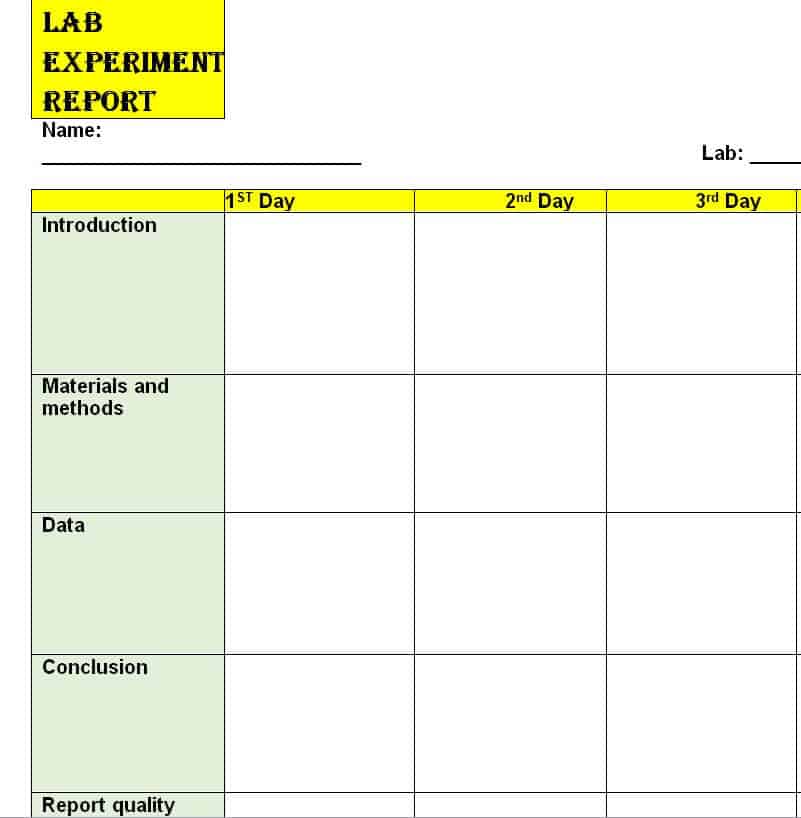
Lab Experiment Report Template
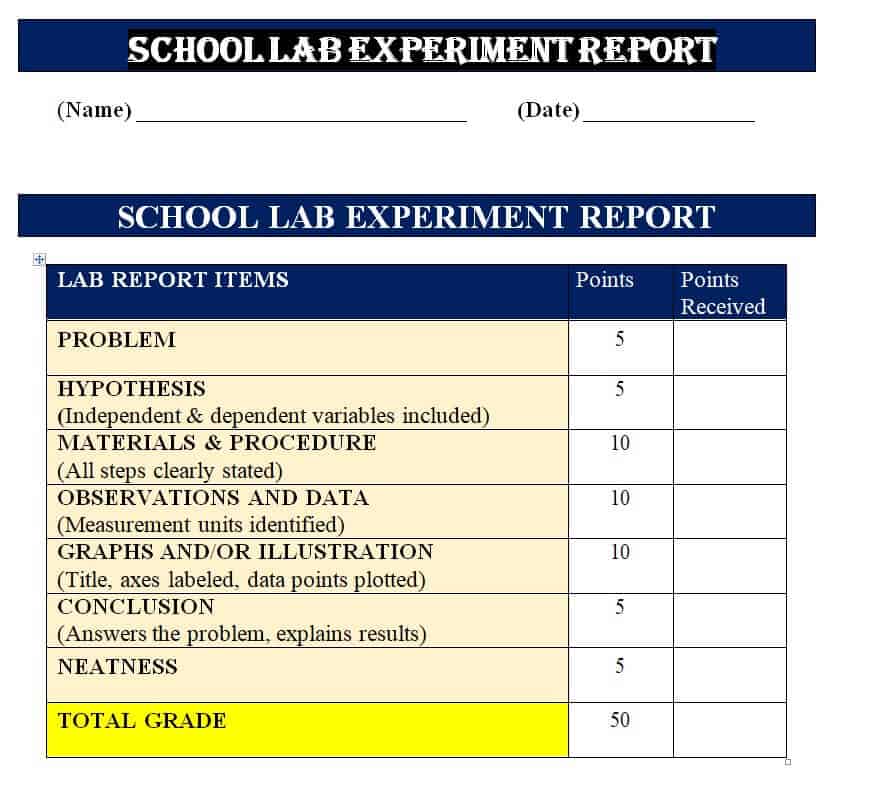
School Lab Experiment Report Template
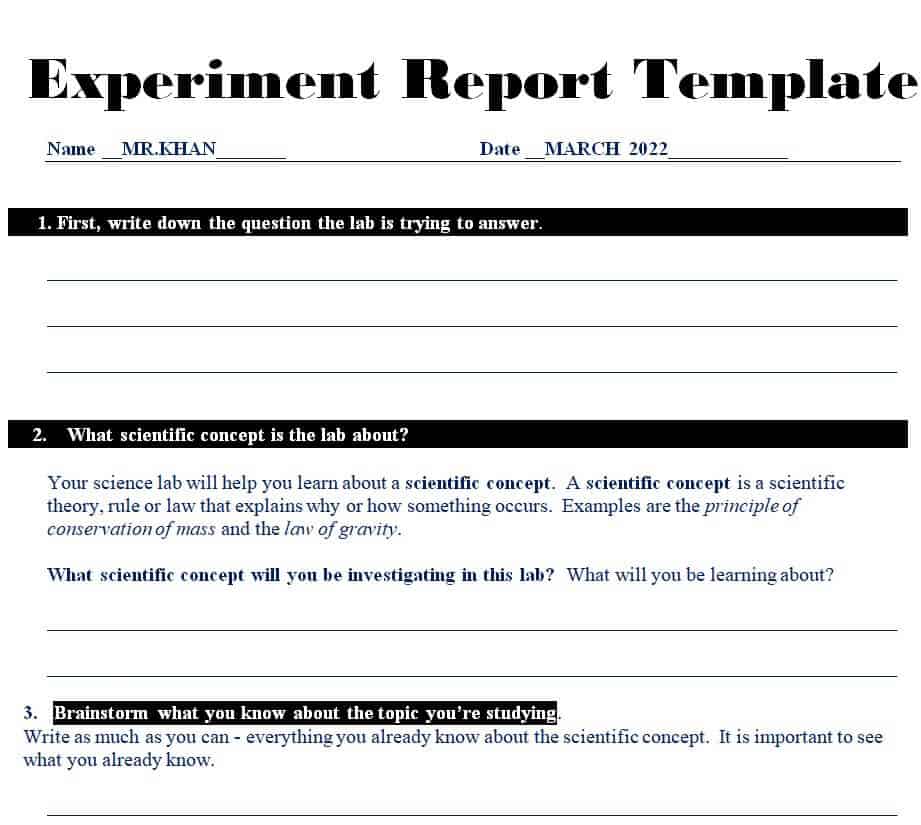
Free Editable Experiment Report Template
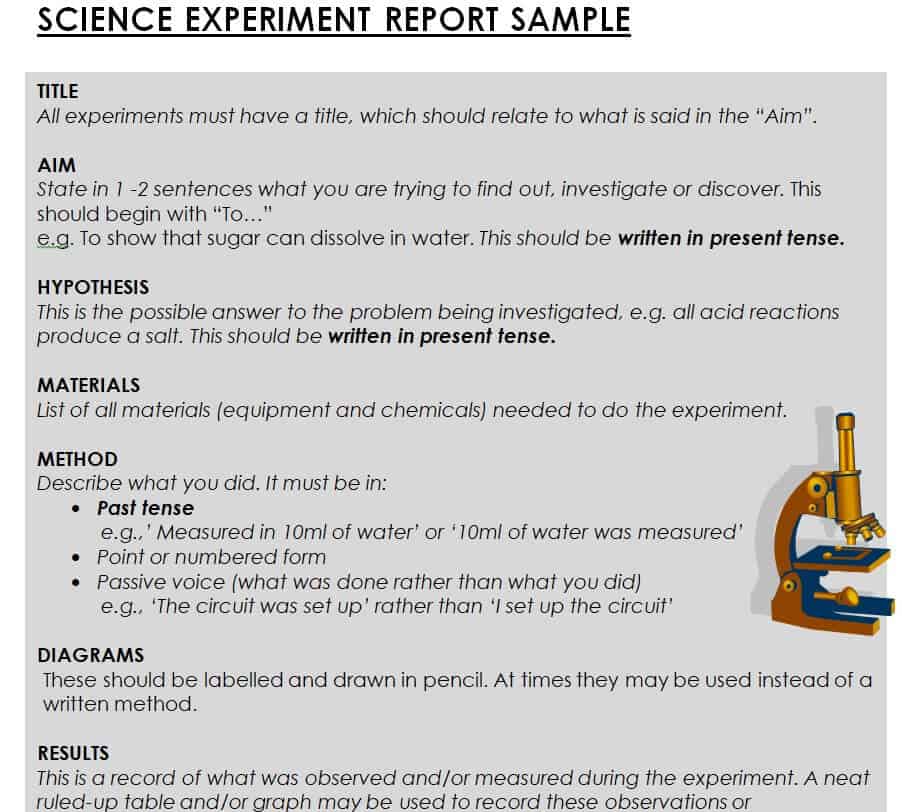
Science Experiment Report Sample
Experiment Report Example WORD
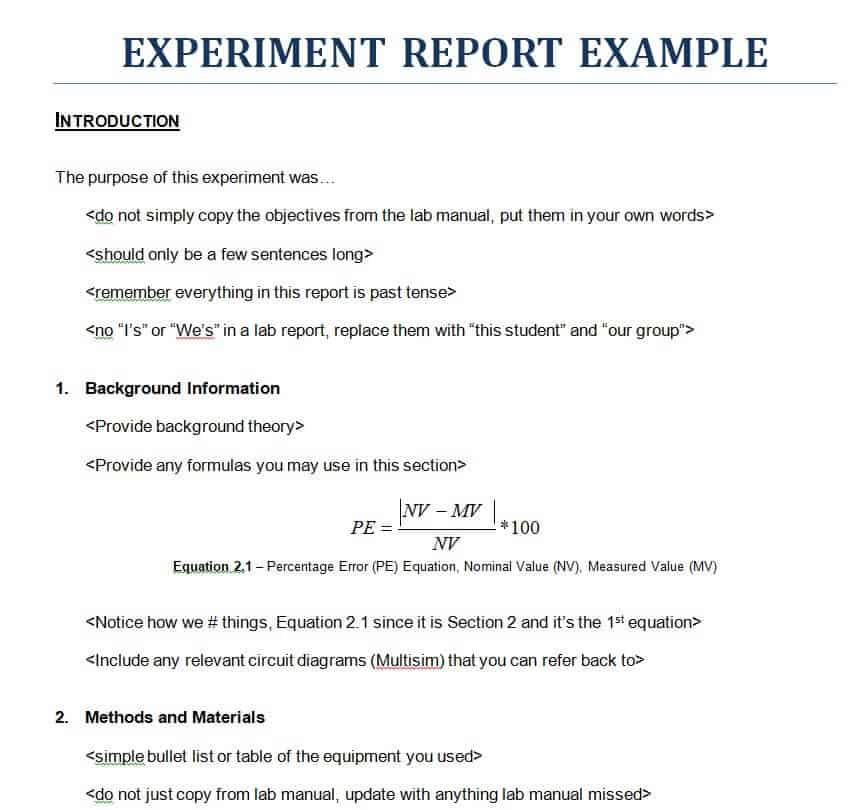
Lab Experiment Report Format
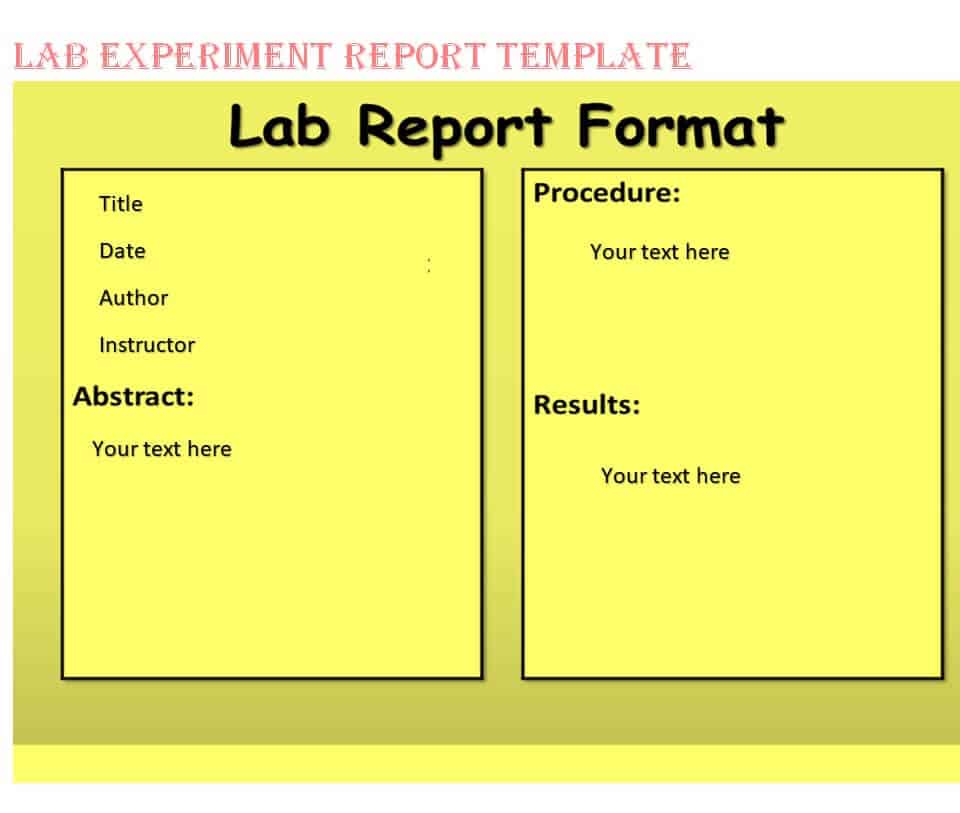
Simple Experiment Report Format
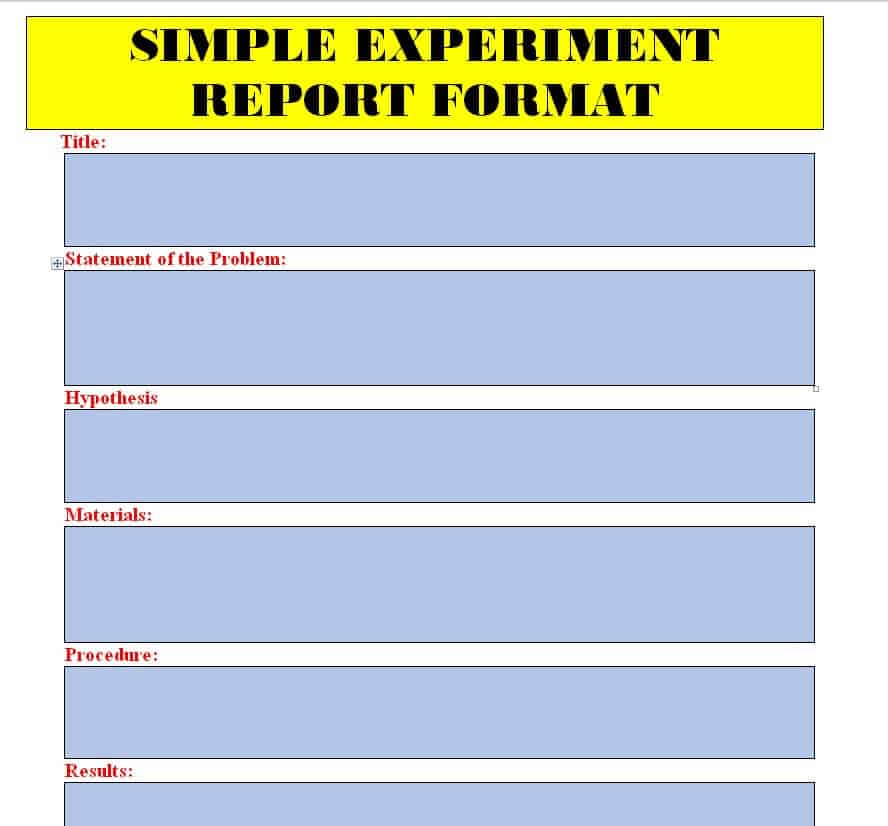
Experiment Report Layout Template in MS WORD
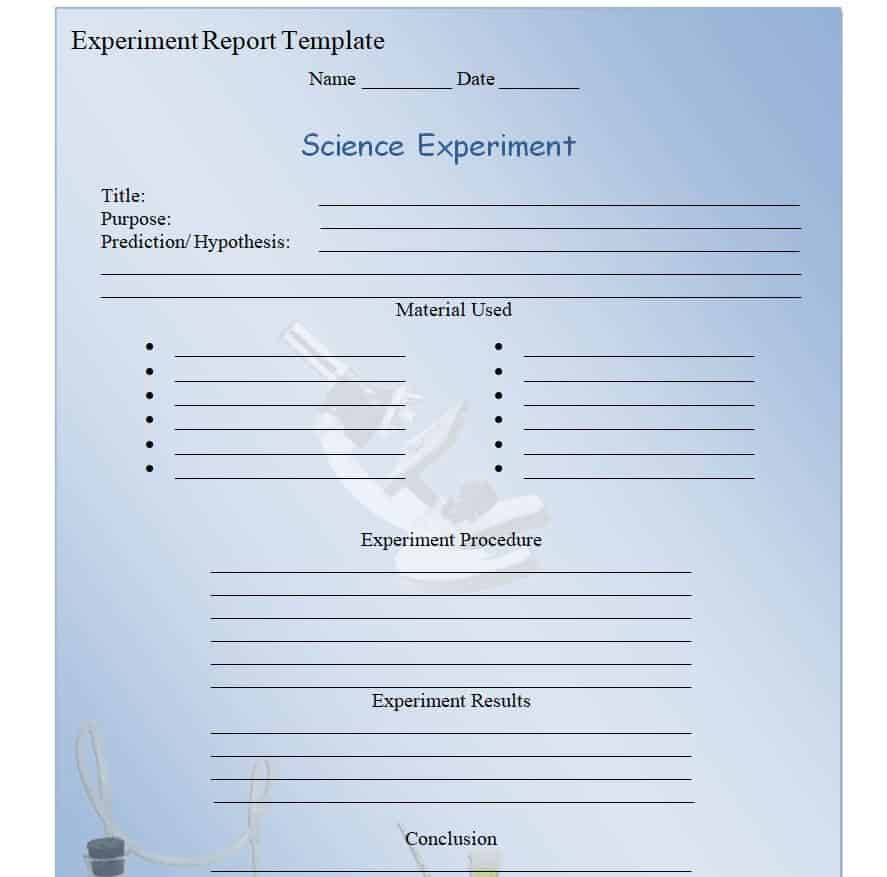
Official Lab Report Template
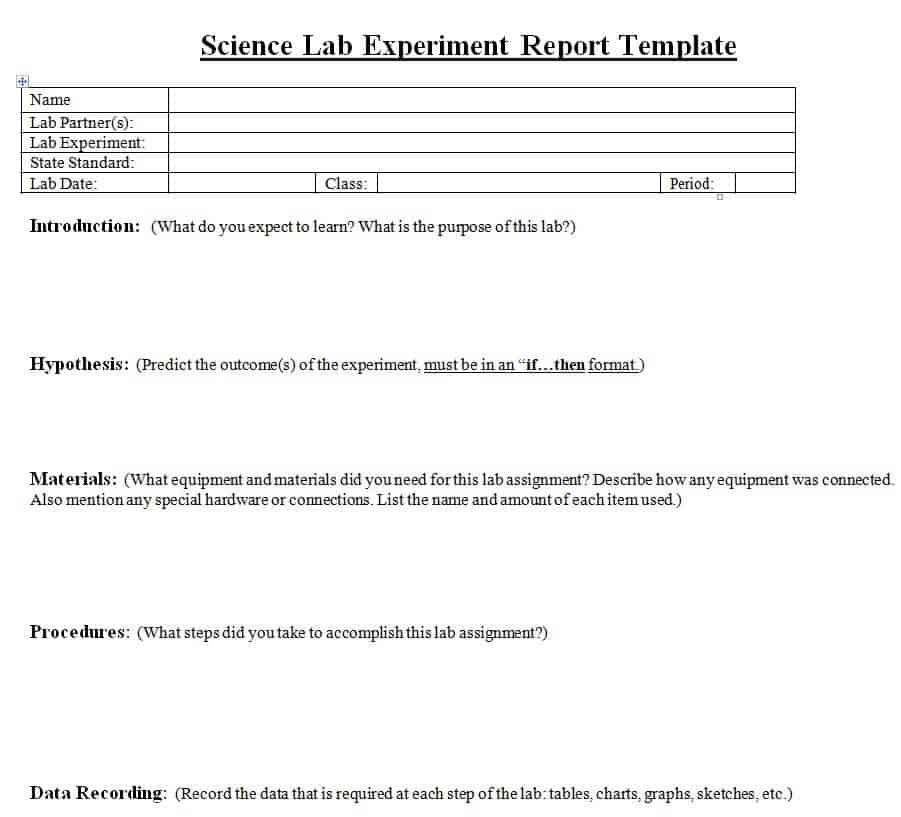
Science Lab Experiment Report Template in DOC Format
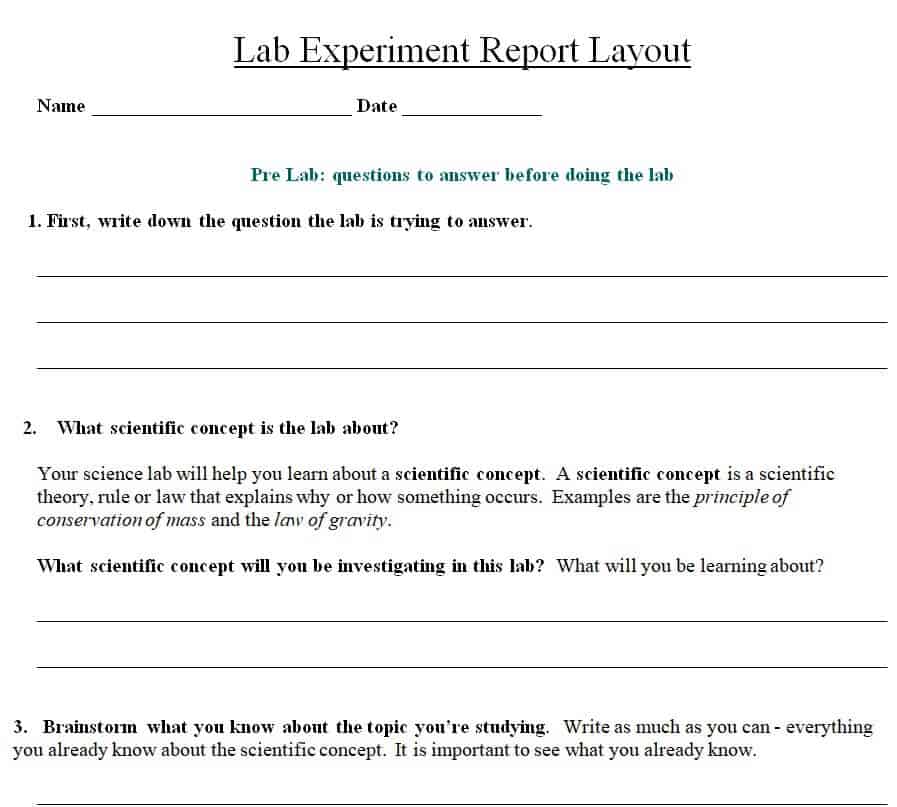
Lab Experiment Report Layout
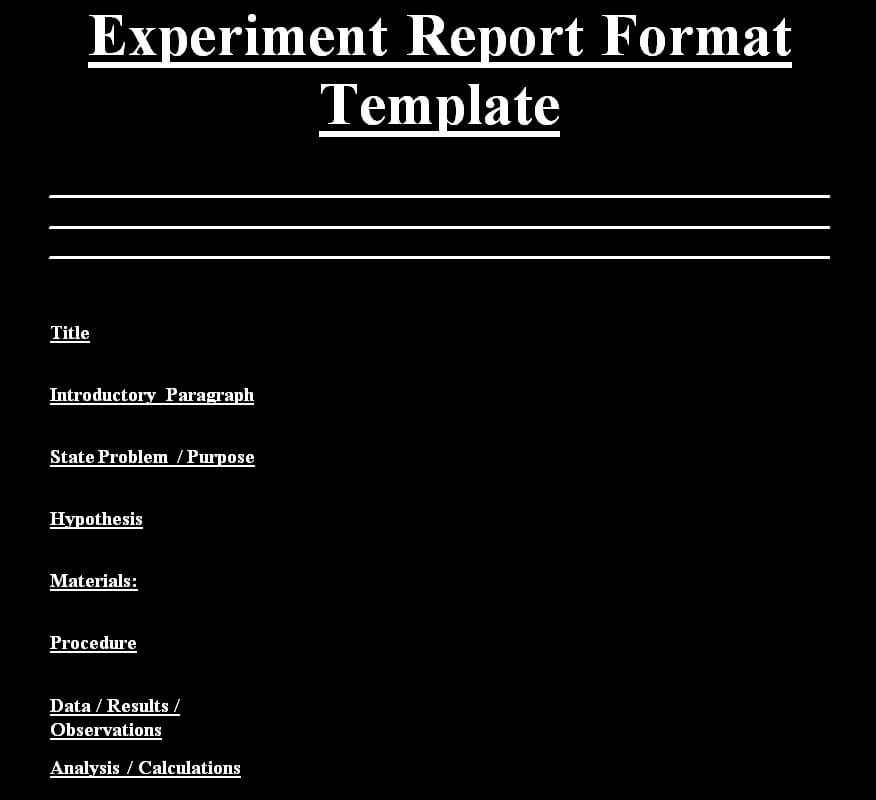
Experiment Report Format Template
Formal Experiment Report Example
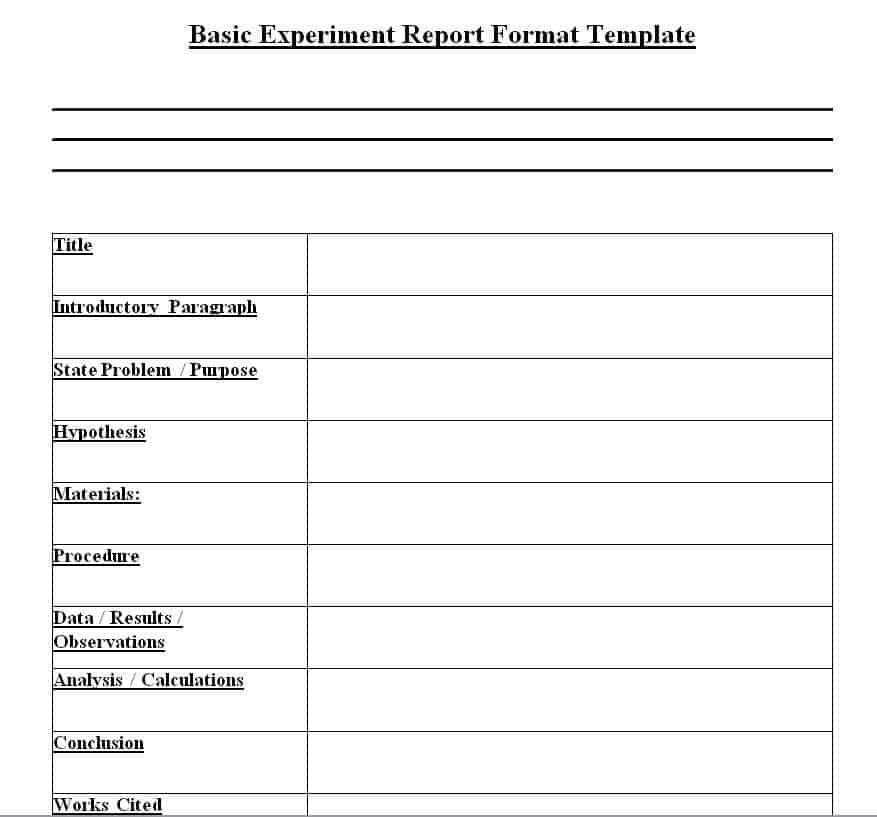
Basic Experiment Report Format Template
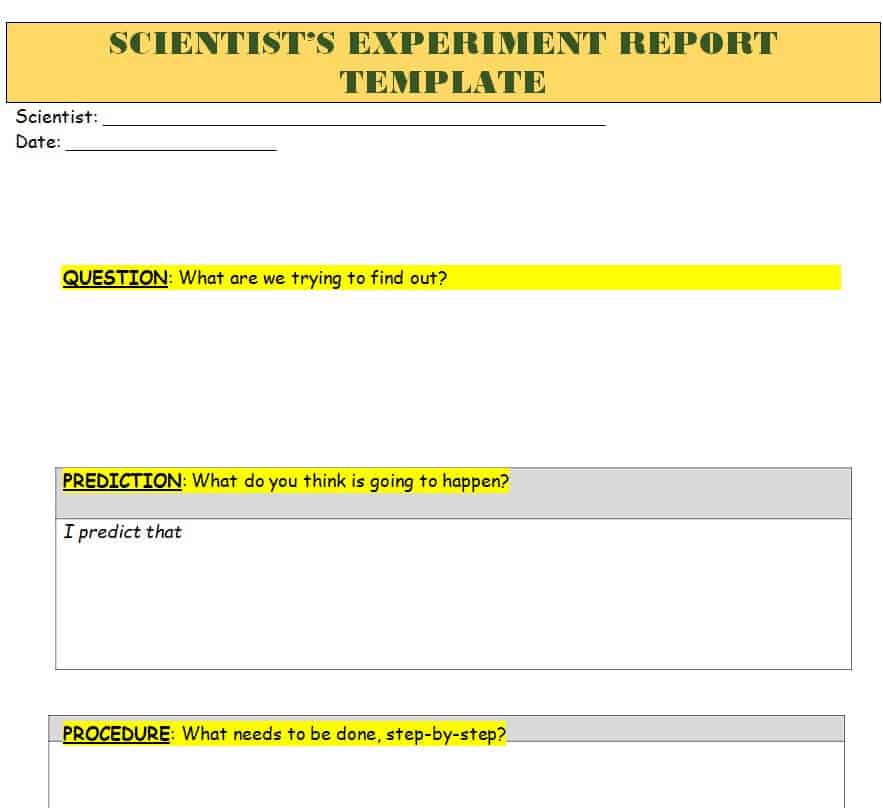
Scientist’s Experiment Report Template
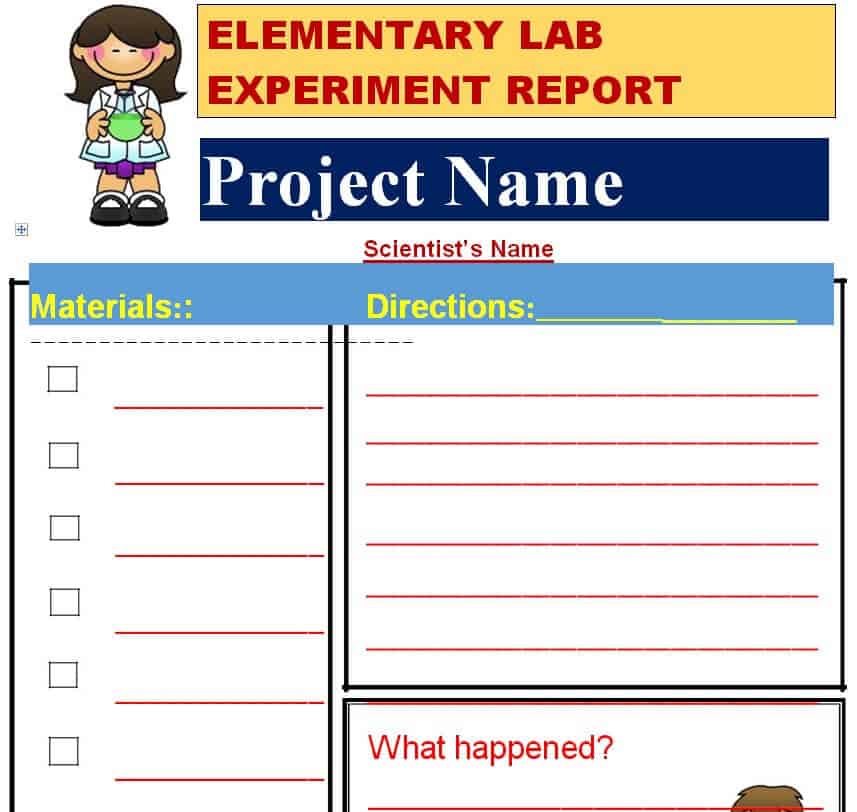
Elementary Lab Experiment Report Template
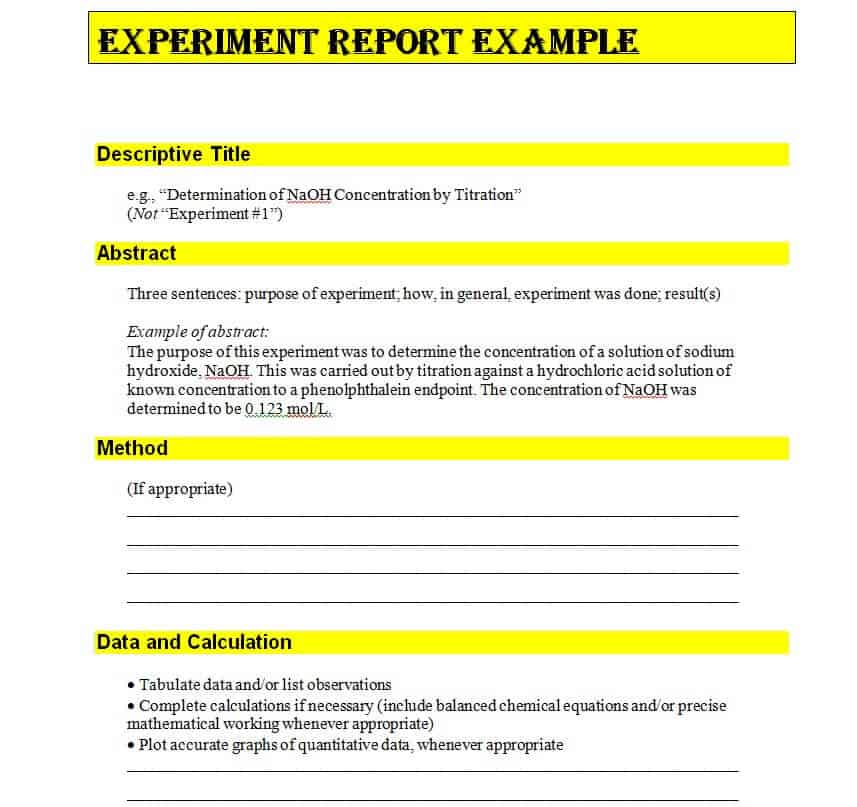
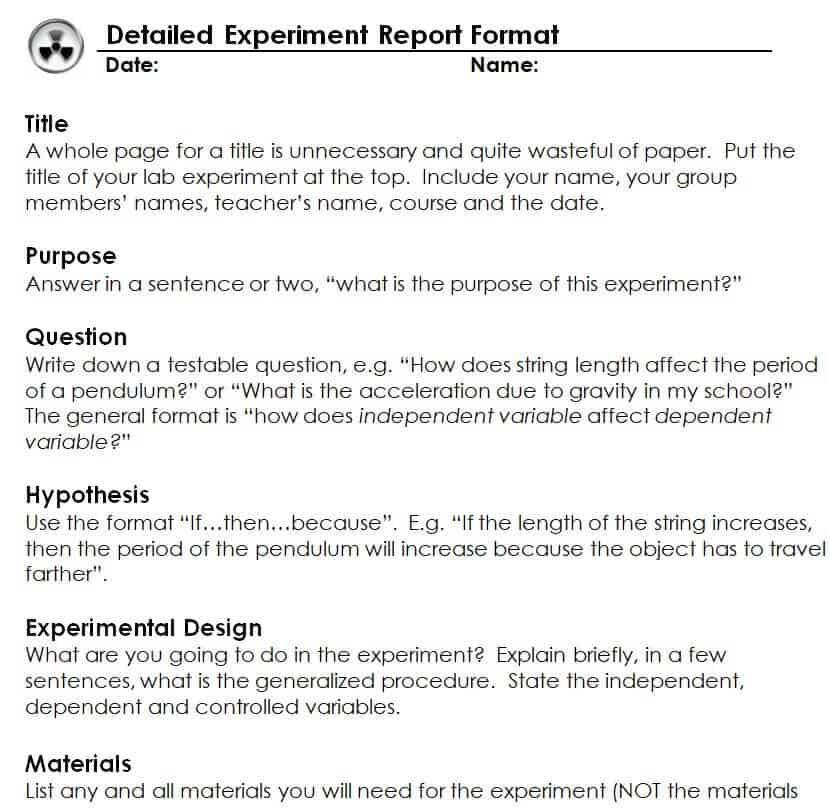
Detailed Experiment Report Format
How to Write a Professional Experiment Report in 4 Steps
To maximize your grade or scientific report accuracy, follow these practical writing tips:
1. Write in the Passive / Third-Person Voice
Avoid using first-person pronouns like “I mixed” or “We measured.” Instead, use objective scientific phrasing: “50 mL of hydrochloric acid was added to the solution.”
2. Present Data Clear and Accurately
Label all table columns with parameters and precise units of measurement (e.g., $g/mL$, $^\circ C$, $m/s^2$). Ensure every chart includes a descriptive figure title and axis labels.
3. Address Experimental Errors Honestly
No experiment is perfect. Explicitly discuss sources of error—such as parallax errors, equipment calibration drift, or environmental temperature fluctuations—and explain how they impacted your quantitative results.
4. Maintain Consistent Typography and Margins
Using a pre-formatted Word lab report template ensures consistent standard 1-inch margins, clear heading hierarchies (H1, H2, H3), and clean typography throughout your submission.

![16+ Sample Expense Report Templates [in EXCEL & WORD]](https://www.reportsexcel.com/wp-content/uploads/2026/08/27f3ee2a-e8a3-4885-b3c0-5099324c42aa-120x120.jpg)
You must be logged in to post a comment.